A Double Feature with a Useful Difference
Plan a double feature around one storytelling contrast, then use a short pause to notice how the first film shaped your expectations of the next.
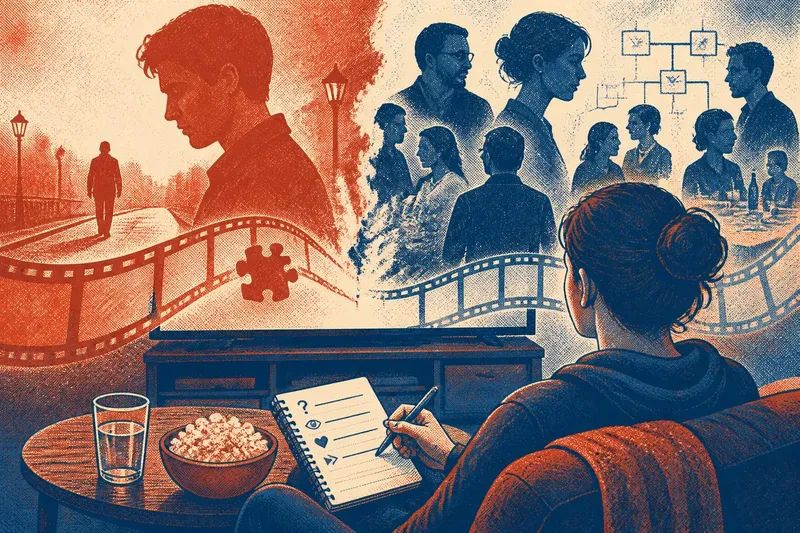
How do you choose two films for a home double feature that give you something to notice beyond whether you liked them? Build the pairing around one clear storytelling contrast: a character who acts before thinking beside one who waits, or a plot that explains its clues beside one that leaves them open. The pause between films is where the contrast becomes visible.
What makes a useful double feature?
A useful pairing is not simply two films with the same star, setting or broad genre. It gives you a question you can carry from one film to the next, such as: who controls the story, the protagonist or the information being withheld? Keep the question narrow enough to remember without taking notes during every scene.
Choose films that differ in one main respect and share enough ground to make comparison possible. Two dramas about family conflict might use very different pacing; two animated adventures might introduce their worlds at different speeds. If every aspect changes at once, it becomes harder to tell which difference shaped your response.
You need not select films that are equally familiar. A well-known film can act as a reference point, while an unfamiliar one lets you notice your expectations forming in real time. If you have seen one before, avoid turning the evening into a test of memory: focus on how its storytelling choices feel beside the other film.
Which contrasts are easiest to notice?
Pick a contrast with something observable on screen. “One is better” is a verdict, not a viewing question; “one tells me what the character wants early, the other makes me infer it” gives you something to watch for.
- Directness and ambiguity: Does the film explain a character’s motive, or leave you to assemble it from gestures and choices?
- Momentum and pause: Does each scene push towards the next event, or make room for atmosphere and reflection?
- Ensemble and focal character: Does attention move among several people, or stay close to one person’s experience?
- Revelation and recognition: Does new information change your understanding, or do you gradually recognise what was present all along?
- Closure and openness: Does the ending settle the central tension, or leave part of it for you to interpret?
These are not rankings. A quiet stretch can build pressure, and a swift explanation can be satisfying rather than simplistic. The point is to notice how a choice guides your attention, not to award a win to one side of the pairing.
How should you choose the films?
Start with the contrast, then look for films that make it legible. If you want to compare withheld and openly stated motives, choose stories where the characters’ intentions matter to the plot. A film in which motive is beside the point will make that question difficult to follow.
Use a streaming service’s synopsis, trailer or genre labels to check the basic premise, but do not let promotional material answer the question for you. A trailer may emphasise action in a film whose full story depends on uncertainty. Read just enough to know what you are choosing, then leave the first viewing relatively unprimed.
Think about practical fit as well as artistic contrast. A dense, emotionally demanding film followed by another equally demanding one may make the second feel harder to enter. You could instead pair a film that asks you to interpret carefully with one that tells its story more plainly, while keeping the same broad subject or character problem.
Say you want to compare a tightly controlled viewpoint with a story that shifts between characters. You might choose two fictional family dramas, one closely following a sibling who is hiding a decision and another moving among the whole household. The expected result is an observable change in where you look for information: inside one person’s behaviour in the first film, and across relationships in the second.
What should you do during the pause?
Give yourself a brief pause after the first film rather than jumping straight into the next. Stand up, refill a glass of water or clear the screen, then jot down a few words. A small physical reset can help you separate your first response from the second film’s opening.
Keep the note short. Try these prompts:
- What did I expect the story to explain?
- When did I feel certain about what a character wanted?
- What kind of scene made me impatient, curious or relaxed?
- What do I now expect the next film to do?
Do not write a plot recap. The useful material is your expectation: perhaps you wanted the first film to state a motive, or assumed every quiet scene was hiding a clue. Those assumptions are easier to spot before another story starts reinforcing or overturning them.
Keep the pause free of trailers, reviews and plot summaries for the second film. Looking up explanations can turn your own anticipation into someone else’s interpretation. If you need to check a practical detail, such as whether subtitles are available, do that without reading commentary.
How can you compare the films without grading them?
Once the second film is over, return to your note and mark what changed. Did you expect a reveal because the first film relied on concealed information? Did you trust a character sooner because the previous story had taught you to question everyone? A comparison becomes useful when you can connect an expectation to a storytelling choice.
Choose one moment from each film that best illustrates the contrast. It might be an early conversation, a repeated object, a shift in viewpoint or the way a scene ends. You do not need to decide which film handled the choice better; describe the effect instead: one scene made you wait for an explanation, while the other made you revise an assumption.
If your response seems mixed, keep it mixed. You may enjoy ambiguity in one story and find it frustrating in another because the characters, stakes or tone differ. The same technique can feel inviting or distancing depending on what the film gives you to care about.
What is not worth the effort? Do not build an elaborate scorecard or pause repeatedly to record every device. That can turn a relaxed evening into an assignment and pull your attention away from the performances, images and scenes that prompted the comparison.
What questions help after a double feature?
Should the films be from the same genre?
They can be, but they do not have to be. A shared genre makes certain expectations easier to compare; films from different genres can still work if their storytelling contrast is clear and relevant to both.
What if I have already seen one film?
Use the familiar film to notice how a new pairing changes its effect. You might recognise a scene’s structure more readily, but pay attention to whether the other film makes that scene feel faster, more open or less predictable.
Should I watch the films on separate evenings?
Either arrangement works. An evening pairing makes the pause immediate, while separate nights can give you more time to sit with each film; keep the same short note so the comparison does not depend on perfect recall.
What if I cannot identify one clear difference?
Choose a smaller point, such as how quickly each film introduces its central relationship or how often it changes viewpoint. If the pairing still feels forced, let it go and choose two films with a more visible connection next time.
What should the next pairing change?
For your next double feature, keep the pause but choose a different question. If you compared how stories reveal motive, try comparing how they handle an ending; if you focused on pacing, shift to whose perspective shapes what you know. The same simple habit makes each evening distinct without asking you to turn film-watching into homework.
A double feature with a useful difference is less about finding a perfect match than catching your expectations in motion. Make one concise note before the second film, then look for the moment that confirms, complicates or breaks it. That small record can sharpen your attention the next time a story asks you to wait, guess or change your mind.